
Q3 peak readiness is decided in Q2 because integration changes, NetSuite reconfiguration, and stress-testing all require a freeze period before Black Friday. eCommerce operations leaders who audit order capture, inventory sync, and returns flows between May and August enter Q4 with clean systems. Those who wait spend January cleaning up.
Why Q3 Peak Readiness Is Decided in Q2
There is a quiet pattern I have watched play out for years inside fast-growing eCommerce brands. Every November and December, an operations leader sits in front of a dashboard at two in the morning, watching orders pile up in an error queue while customer service tickets multiply. Inventory shows available in NetSuite but the 3PL says it shipped yesterday. A retail partner sends a chargeback notice for a missed ship window. The CFO asks why revenue recognition is off by six figures, and nobody has a clean answer until the team can manually reconcile three different systems on a Saturday morning.
The interesting part is not that this happens during peak. The interesting part is that it was almost always decided in May, June, and July. Q3 peak readiness is a Q2 conversation, and most operations leaders are not having it yet.
If you run finance, operations, or technology for a brand doing more than fifty million in revenue, the next ninety days are the most important of your year. By the time Labor Day arrives, the architecture of your peak is locked. You will either go into Q4 with clean order-to-cash flows, an integration platform that scales under load, and a NetSuite instance that can close the month while orders are flying, or you will go in hoping nothing breaks. Hope is not a peak strategy.
Why do eCommerce brands underinvest in operations between February and July?
Brands tend to underinvest in their eCommerce operations stack between February and July. The question we hear most often from operations leaders in May is when to start preparing a Shopify NetSuite integration for Black Friday, and the honest answer is you started ninety days ago. The reason is human, not technical. The post-holiday recovery period feels like permission to coast. Volume is lower, the team is tired, and the executive team is focused on growth investments that show up in marketing decks rather than infrastructure roadmaps. Then July hits, the back-to-school cycle starts pulling volume forward, and suddenly the operations team is running a triage list of issues that they tabled in March.
The brands that come through peak cleanly do something different. They treat Q2 as the build window. They use it to audit what broke last year, fix the integration patterns that almost broke, and stress-test the parts of the stack that have grown faster than the original design assumed. They do not wait for the volume to expose the problem.
A useful exercise this time of year is to pull your Q4 incident log from last year and sort it by root cause. You will almost always find that the issues cluster around three or four themes. Order capture timing during flash sales. Inventory accuracy between the storefront and the warehouse. Refund and return flows that double-post or fail silently. Tax calculation drift between checkout and the system of record. Each of those themes traces back to a specific integration pattern or NetSuite configuration choice that can be improved before September. You just have to commit to the work now.
What does peak season readiness require for NetSuite and Celigo?
The brands I work with that get peak right share a few common traits in how they approach the May-through-August window. They have a clear picture of which channels are growing fastest and what that growth will do to their integration volumes. They know the throughput limits of their current configuration, and they have a plan for the moments when volume will exceed it. They have someone whose job it is to monitor integration health every day, not just respond when something fails.
Most importantly, they understand that their eCommerce operations stack is a layered system. The channels and marketplaces hold the truth about what the customer ordered. NetSuite holds the record of what the business did about it. Celigo carries the truth across, in both directions, between the storefront, the financial system, and the 3PL. When that flow is clean, the business can scale. When that flow is gummed up with workarounds and one-off scripts that nobody documented, peak will expose every weakness at the worst possible time.
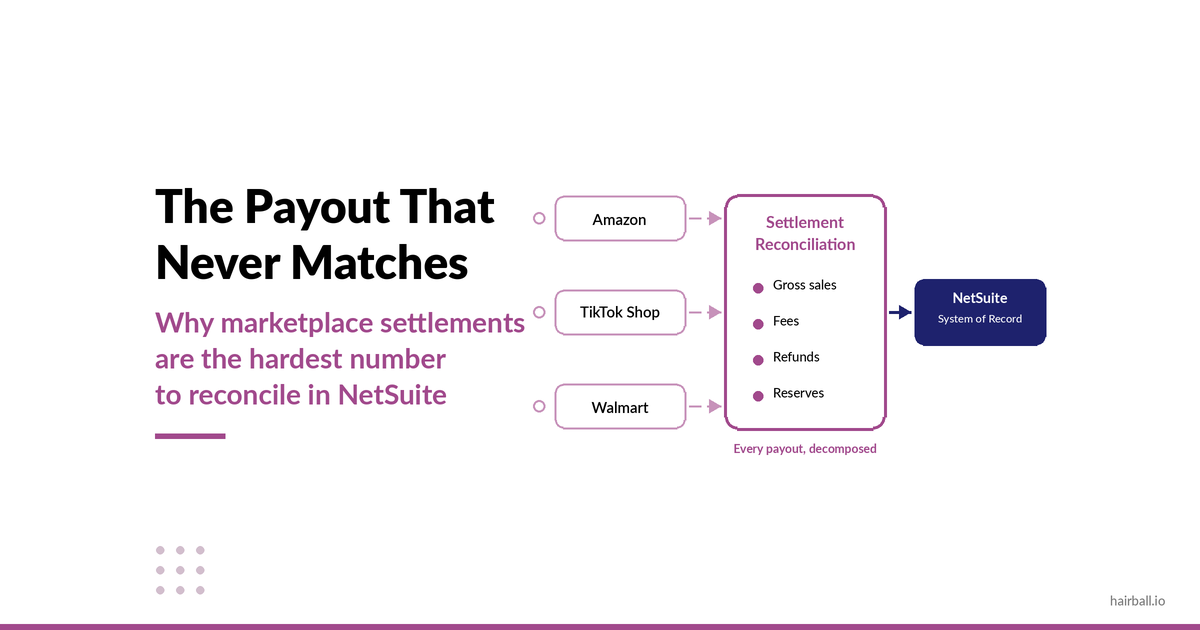
This is where a strong Shopify NetSuite integration earns its keep. How Celigo handles high-volume order sync is the difference between selling through peak and firefighting through it. The integration platform is not just middleware. It’s the connective tissue that decides whether your team spends Q4 selling or spends it firefighting. The same is true for your Amazon, TikTok Shop, Faire, and EDI flows. If any one of those pipes is undersized or misconfigured for the volume you are about to push through it, you will feel it within ten days of Black Friday.
The audit that pays for itself: How do you run a Q2 peak readiness audit?
If you do nothing else this quarter, run a Q2 readiness audit on your operations stack. Pull together someone from finance, someone from operations, and someone from technology, and walk through your channels in order of revenue contribution. For each channel, answer four questions.
The first question is whether the order capture flow has changed since last peak. New checkout features, new payment methods, new fulfillment options at the storefront level often introduce data that the integration was not designed to handle. The integration may be working today at low volume because errors get caught and resolved manually. At ten times the volume, manual resolution becomes impossible and the queue becomes a wall.
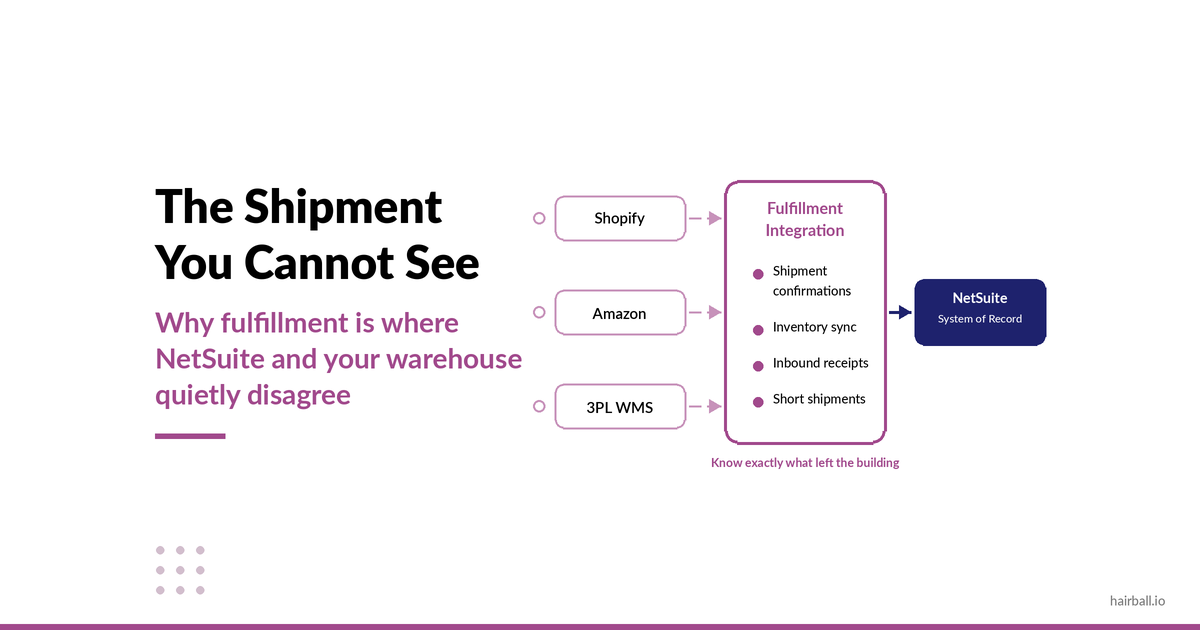
The second question is whether your inventory sync model can keep up with your fastest moving SKUs during a flash sale. Many brands run inventory updates on a schedule that worked when their bestseller did a hundred units a day. When that same SKU does five thousand units in an hour, the schedule turns into a liability. This is the underlying reason Shopify orders error out during flash sales: the sync schedule was designed for a different business. The fix is rarely complicated, but it has to be decided in advance.
The third question is whether your returns and refund flows close cleanly back into NetSuite for revenue recognition. Returns are the silent killer of clean financials at peak. They spike in January, they hit during the close window, and a misconfigured return flow can turn the January close into a two-week project. Q2 is the right time to clean this up. By September you are too close to peak to make schema changes safely.
The fourth question is whether your team knows what to do when something does go wrong. Even the best designed integration will throw errors at peak. The question is not whether errors will happen. The question is whether your team has a clear playbook for triaging them, who owns each category of error, and how fast the resolution loop closes. Peak readiness is a process discipline, not just a configuration state.
What continued NetSuite success looks like in practice
There is a phrase I use with our clients, which is that NetSuite is not a project, it is a practice. The implementation goes live, and then the real work begins. That’s what a NetSuite continued success partner does: keep the system aligned with how the business actually operates, quarter after quarter. The brands that thrive in NetSuite long-term are the ones that treat their instance as a living system. They keep the configuration current with how the business actually operates. They retire customizations that no longer serve a purpose. They invest in the integration layer so the system of record actually reflects reality.
This is the work Hairball does every day. We are a top Celigo implementation partner and a NetSuite continued success provider, which is a fancy way of saying we help brands turn their integration and ERP investments into operating leverage. Most of our clients come to us not because their NetSuite is broken, but because their NetSuite is fine and they need it to be excellent. The gap between fine and excellent is where peak readiness lives.
If you are reading this in May, the calendar is on your side. There is still time to audit, prioritize, and execute the work that will matter when volume hits. There is still time to upgrade the integration patterns that have grown brittle. There is still time to bring your NetSuite configuration current with how the business has evolved since the last major build. By August, the conversation shifts from build to freeze, because nobody wants to make material changes inside peak.
The brands that come out of Q4 looking smart are the brands that did the work in Q2. The brands that spend January cleaning up are the brands that hoped it would all hold together. You get to choose which side of that line you sit on, and the choice is made by what you commit to in the next ninety days.
If you want a partner who has run that ninety-day window with more than a hundred fast-growing brands, that is what we do at Hairball. The work is not glamorous, but the outcome shows up in your Q4 numbers and your January close. That is the only scoreboard that matters.