
Every month, the same thing happens. The close window opens, the finance team starts pulling reports, and within a day or two, the reconciliation problems surface. Transactions that don’t match. Revenue that doesn’t tie. Settlement data from marketplaces that looks different in the ERP than it did on the platform. The team spends the next week untangling it, and the close that was supposed to take five business days stretches to eight, then ten, then twelve.
Leadership looks at finance. Finance looks at the calendar. Everyone agrees the team needs to be faster.
But speed was never the problem. The problem started upstream, long before the close window opened, in the integration layer that determines how transactional data enters the system in the first place.
When the Data Arrives Wrong, the Close Pays the Price
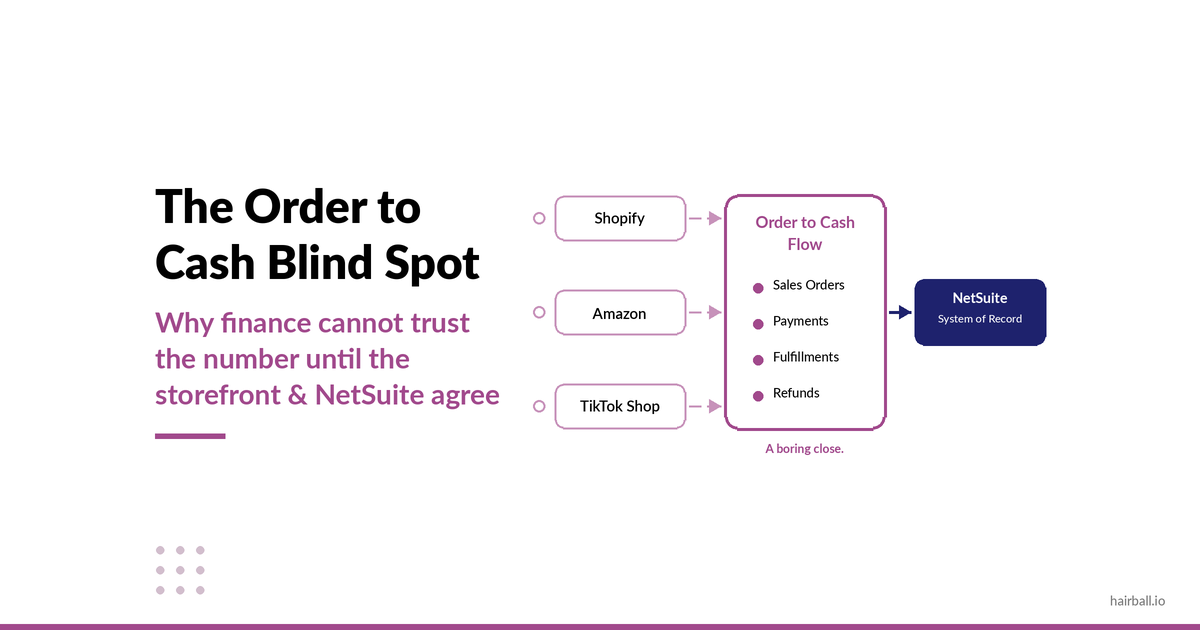
The monthly close is downstream of everything. It sits at the end of a long chain of operational events: orders placed, inventory allocated, shipments confirmed, returns processed, settlements received. Each of those events generates data. And in a modern eCommerce operation running multiple channels through NetSuite, that data passes through an integration layer before it reaches the general ledger.
When that integration layer is well designed, data arrives in the ERP clean, normalized, and mapped to the right accounts. The close becomes a verification exercise. Finance confirms what the system already knows.
When the integration layer is not well designed, data arrives in fragments. Orders from Shopify carry one set of assumptions. Amazon settlements carry another. Wholesale EDI documents follow a third logic entirely. Each one technically posts to NetSuite. Each one technically reconciles to something. But the “something” is different depending on the channel, the time of month, and how the original mapping was configured.
That is when the close stops being a process and starts being an investigation.
The Reconciliation Tax
There is a hidden cost that most eCommerce brands carry without ever quantifying it. We call it the reconciliation tax. It is the time the finance team spends every month reconstructing what should have been obvious from the data.
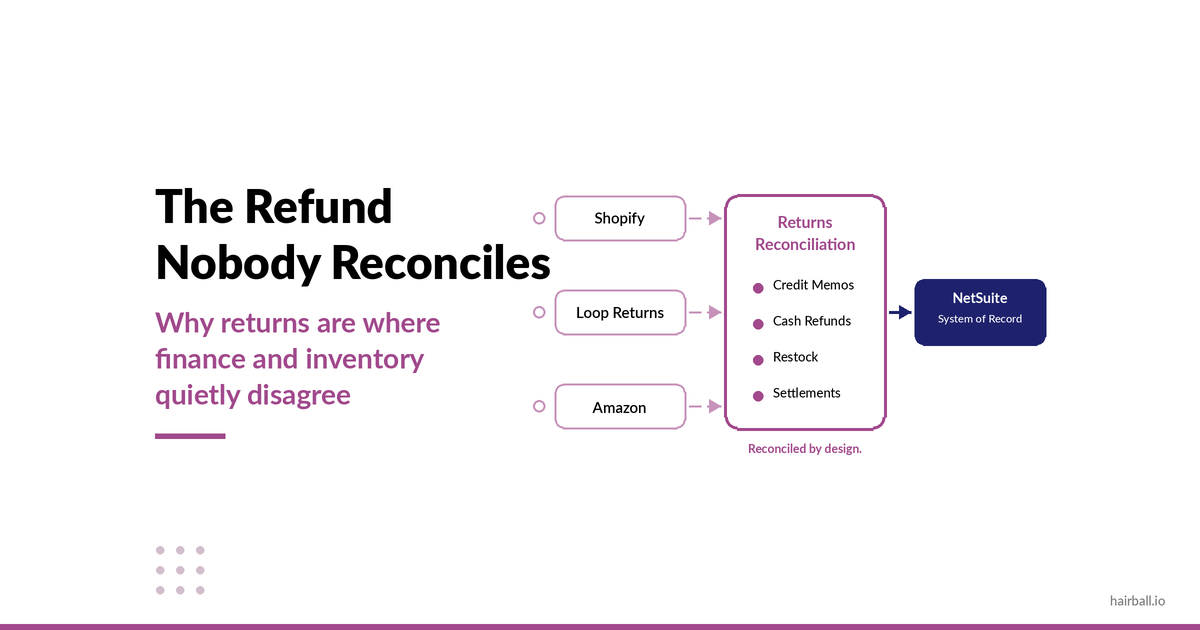
Here is how it typically plays out. A brand sells through Shopify, Amazon, and one or two wholesale accounts. Each channel settles differently. Shopify deposits daily with a fairly transparent payout report. Amazon settles biweekly with a complex statement that nets fees, advertising costs, returns, and chargebacks against gross sales. Wholesale accounts pay on terms, sometimes with deductions the brand never agreed to.
All of this flows into NetSuite. But because each channel was integrated at a different time, often by different teams, the mapping logic is inconsistent. Shopify orders post at the line-item level. Amazon orders post as a lump settlement. Wholesale invoices sit in AR until someone manually matches the payment.
This Is a Design Problem, Not a Process Problem
Finance inherits this mess every month. They are not slow. They are compensating for upstream decisions that were made without considering what the close would need.
If your team is spending more time on reconciliation than on analysis, the problem is worth looking at upstream. We have helped a number of brands work through exactly this. If it sounds familiar, we’re happy to talk through what we typically find.