About Bones Coffee
Bones Coffee Company is a specialty coffee brand based in Cape Coral, Florida, known for its bold, unconventional flavors and playful skeleton-themed branding. With 40+ blends ranging from Maple Bacon to S’mores, the company sells direct-to-consumer through Shopify and across major marketplaces including Amazon and Walmart. Bones Coffee has built a loyal following, with a 70% repeat customer rate on their DTC channel.
Website
Industry
Food and Beverage
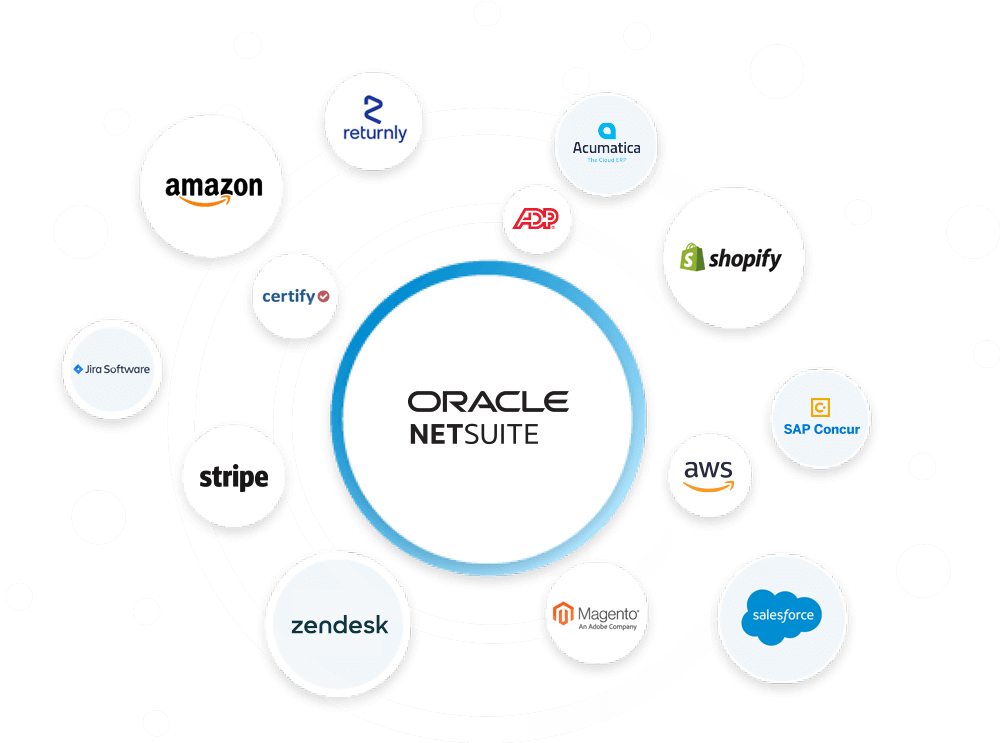
Integrations


The Challenge
Bones Coffee was selling across multiple channels: their own Shopify storefront (which also pulls in orders from Faire, TikTok, and other connected sales channels), POS transactions, Amazon, and Walmart. Each channel had its own order processing requirements, fulfillment paths, and accounting needs. The problem was that none of it was properly connected to NetSuite.
On the Shopify side, the team had been running an integration through Farapp, which was getting the job done but wasn’t built for the complexity of a multi-channel Shopify setup. It also didn’t support the end-to-end fulfillment workflow through their warehouse management system (WMS). Amazon and Walmart were a bigger issue. For both marketplaces, Bones Coffee participates in Fulfilled by Amazon (FBA) and Walmart Fulfillment Services (WFS), meaning Amazon and Walmart hold the inventory, pick, pack, and ship orders on Bones Coffee’s behalf. The company also fulfills some orders directly (FBM). The accounting treatment for each model is different, and Bones Coffee didn’t have an integration to handle it.
Instead, their accounting team was creating manual journal entries once a week/month to account for marketplace revenue. That meant delayed financial visibility, a higher risk of errors, and a process that couldn’t keep up as order volume grew. The accounting team also had limited NetSuite experience, which compounded the problem. Getting marketplace data into the system accurately and on time was a recurring pain point.
Key Issues
1. Shopify Integration on an Outdated Platform.
Bones Coffee had been running their Shopify-to-NetSuite integration through Farapp. The team needed to migrate to Celigo for better reliability, flexibility, and support for their growing multi-channel order volume across Shopify, Faire, TikTok, POS, and other connected sales channels.
2. No End-to-End Fulfillment Integration.
Bones Coffee’s fulfillment runs through their warehouse management system. The existing Farapp integration didn’t support a connected fulfillment workflow where orders flow from Shopify through NetSuite to WMS and back, leaving fulfillment status updates disconnected from the rest of the system.
3. No Automated Marketplace Integration.
Amazon FBA and Walmart WFS orders had no system-to-system connection with NetSuite. Revenue from these channels was being recorded through manual journal entries on a weekly or monthly basis, creating delays and gaps in financial reporting.
4. Different Accounting Treatment for FBA/WFS vs. FBM.
Orders fulfilled by Amazon or Walmart don’t follow the standard Sales Order to Item Fulfillment path. Because the marketplace holds the inventory and ships the order, the correct NetSuite treatment is a standalone invoice. But orders fulfilled by the merchant (FBM) still need the full Sales Order, Invoice, and Item Fulfillment flow. Both models run simultaneously on each channel.
5. Kit Package Items and Standalone Invoices.
Bones Coffee sells sample packs and variety bundles, which are configured as kit/package items in NetSuite. These items are made up of multiple components and don’t carry their own inventory or cost. This created issues in two places: on the marketplace side, NetSuite does not allow standalone invoices for kit/package items (blocking FBA and WFS orders with bundles); and on the Shopify side, POS orders containing kit/package items required custom handling to process correctly as Sales Orders.
The Solution
Hairball took a phased approach, starting with the Shopify migration and end-to-end fulfillment integration, then building out the Amazon and Walmart integrations with custom logic to handle the kit/package item limitation across every channel.
Shopify Migration to Celigo with End-to-End Fulfillment
Hairball migrated Bones Coffee’s Shopify-to-NetSuite integration from Farapp to Celigo, using the standard Celigo Integration App for Shopify. This gave the team a modern, supported integration platform with better error handling and visibility into order flow.
But this wasn’t just a platform swap. Hairball built out the full order-to-fulfillment cycle connecting Shopify, NetSuite, and their warehouse management system. The flow works like this: orders come in through Shopify (including orders from Faire, TikTok, POS, and other connected sales channels), and are imported into NetSuite as Sales Orders via Celigo. From there, the Sales Orders flow to their warehouse management system (WMS) for picking, packing, and shipping. Once the WMS marks an order as shipped, the Item Fulfillment is created in NetSuite, and the fulfillment status syncs back to Shopify through Celigo.
Hairball also built a custom flow to handle POS orders that contain kit/package items. Because these orders need to be processed as Sales Orders with proper component resolution, the standard Shopify Integration App flow couldn’t handle them out of the box. The custom flow ensures POS kit/package orders are imported correctly and follow the same Sales Order path as the rest of the fulfillment workflow.
Amazon and Walmart Standard Flows
For both Amazon and Walmart, Hairball set up the Celigo Integration Apps to import orders into NetSuite. Their Warehouse Management System (WMS) continues to handle physical fulfillment, but Hairball now manages the order import and NetSuite record creation.
For FBM orders (fulfilled by the merchant), the standard flow creates a Sales Order, Invoice, and Item Fulfillment in NetSuite. For FBA and WFS orders (fulfilled by the marketplace), the standard flow creates a standalone invoice, since Bones Coffee has already transferred inventory to Amazon or Walmart and doesn’t handle shipping.
Custom Extended Flows for Kit/Package Items (Amazon and Walmart)
This is where the project got interesting. When an FBA or WFS order contains a kit/package item, the standard Celigo flow attempts to create a standalone invoice and fails. NetSuite blocks it because kit/package items need a fulfillment record to resolve their components.
Hairball built custom extended flows for both Amazon and Walmart that handle this automatically:
- Orders enter through the standard Celigo Integration App flow
- The flow hits an error on kit/package item invoices
- The custom flow picks up those errors and retrieves the retry data
- It creates a Sales Order for the order
- It generates an Invoice tied to that Sales Order
- It creates an Item Fulfillment to close out the order
- It resolves the original error in the standard flow automatically
This pattern was built once and replicated across both Amazon and Walmart. Combined with the custom POS flow on the Shopify side, the result is that every order, regardless of item type or fulfillment model, gets processed and recorded in NetSuite without manual intervention.
Settlements
Hairball is also implementing settlement reconciliation for both Amazon and Walmart to close the loop on marketplace payouts and ensure that revenue recorded in NetSuite ties back to actual deposits.
The Results
Bones Coffee is now live across all sales channels with automated, connected integrations running through Celigo and NetSuite.
Three integrations live with end-to-end fulfillment:
Shopify (including Faire, TikTok, POS, and other sales channels), Amazon, and Walmart are all connected to NetSuite through Celigo, replacing manual processes and a legacy integration platform.The Shopify integration includes a full fulfillment cycle through WMS.
Manual journal entries eliminated:
FBA and WFS orders that previously required weekly or monthly manual entries now flow into NetSuite automatically.
Kit/package item limitation solved across every channel:
Custom extended flows handle the NetSuite restriction on standalone invoices for kit/package items, processing them through an automated Sales Order, Invoice, and Fulfillment path.
Consistent order processing:
Whether an order is fulfilled by Bones Coffee (FBM and Shopify channels) or by the marketplace (FBA/WFS), and whether it contains standard items or kit/package bundles, the correct NetSuite records are created automatically.
With settlements on the way, Bones Coffee will have full financial visibility across every channel, from order placement through to payout reconciliation, all running through a single connected system.