
Every operations leader I work with treats June like a soft month. The first quarter close is behind them, the summer hiring slowdown is starting, and the executive team is heads-down on the half-year board update. The instinct is to use June to breathe. The brands that come through Q3 and Q4 looking smart use it for something different. They use June to run the mid-year audit that everyone else skips.
A NetSuite mid-year audit is not a glamorous exercise. It does not produce a slide that wins a board meeting. It does not show up in a marketing dashboard or a growth report. What it does produce is the list of things that are quietly drifting out of alignment with how the business actually operates, before that drift turns into a Q4 incident, a January close issue, or a chargeback the finance team has to write off. Most operations stacks at fast-growing brands accumulate that kind of drift faster than the leadership team realizes, and the only reliable way to catch it is to look on purpose.
Why run the audit in June, specifically
The reason June matters is sequencing. By July, most operations teams are already shifting into back-to-school readiness and early Q4 planning. By August, the unofficial change freeze begins. By September, anyone proposing a material change to a NetSuite workflow or an integration mapping is going to get pushback from finance and from the warehouse, and rightly so. If you have not surfaced the issues by the end of June, the realistic window to fix them collapses fast.
The pattern I see most often is that brands wait until something breaks to look. They learn about a configuration problem from a chargeback notice, an inventory discrepancy, a refund that posted twice, or a CFO question that cannot be answered cleanly. Each of those signals is a problem you could have caught months earlier with a structured audit. The signal cost the business something. The audit, run quietly and on schedule, would not have.
The four lenses of a NetSuite mid-year audit
A useful mid-year audit looks at the operations stack through four lenses, in order. Each one builds on the last, and each one tends to expose something the previous lens missed.
The first lens is configuration drift inside NetSuite. Every fast-growing brand customizes its NetSuite instance over time. New custom fields get added to support a new channel. New saved searches get built to answer a one-off question for the CFO and then quietly become a dependency for a downstream report. Workflows get tweaked to handle an edge case for one customer and never get revisited. Eighteen months into a brand’s NetSuite life, the instance looks nothing like the original build, and almost none of that change is documented. A NetSuite health check pulls the current state into the open and asks which of those customizations still serve the business and which are technical debt.
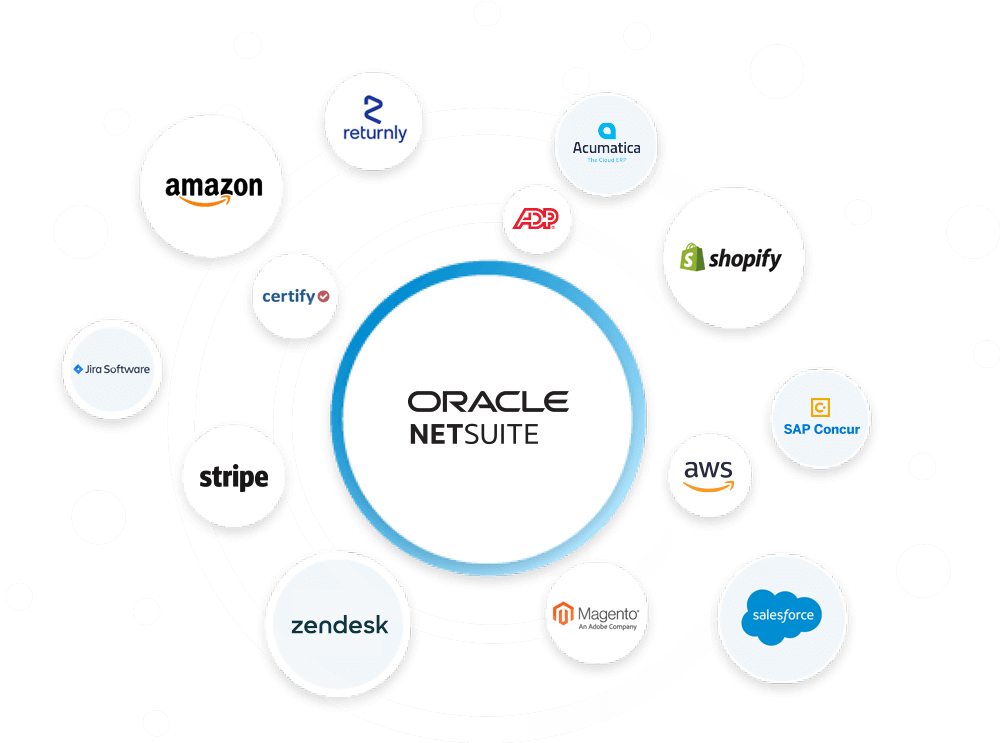
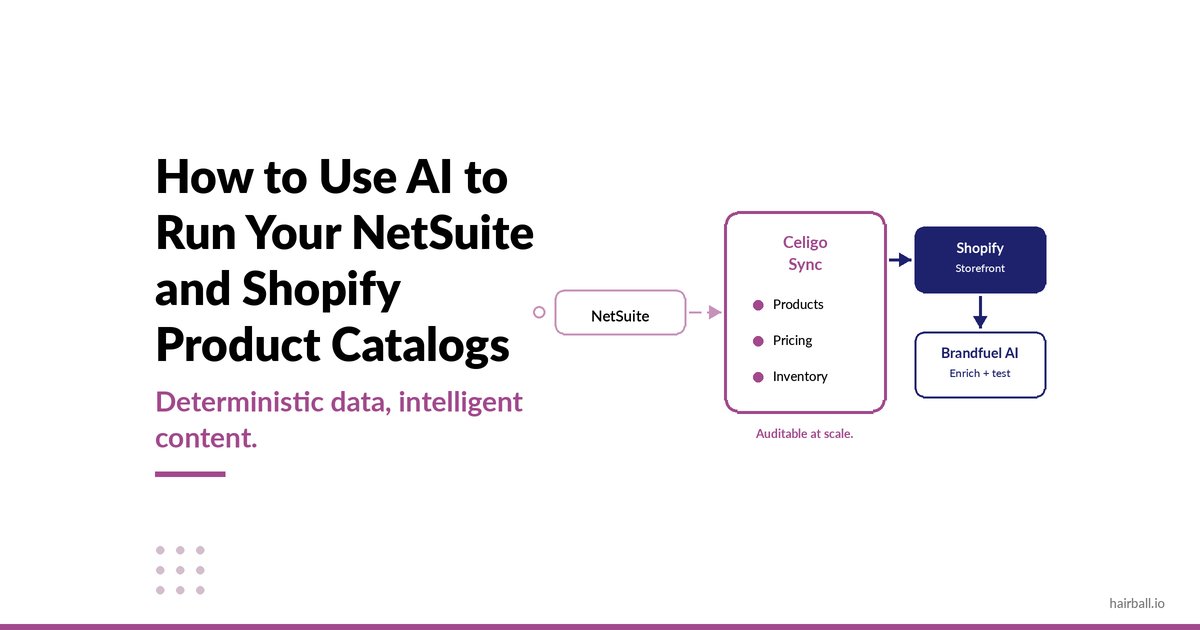
The second lens is integration health. This is where Celigo lives. The integration platform carries the truth from the storefront to the system of record, and from the system of record to the warehouse, the marketplace, and the trading partner. The audit question is simple. Which flows are running clean, which flows are running with daily exceptions that the team has gotten used to, and which flows are running on assumptions that no longer hold because the business volume or shape has changed. A Celigo integration audit is not about whether the flows ran. It is about whether they ran in a way the business can scale.
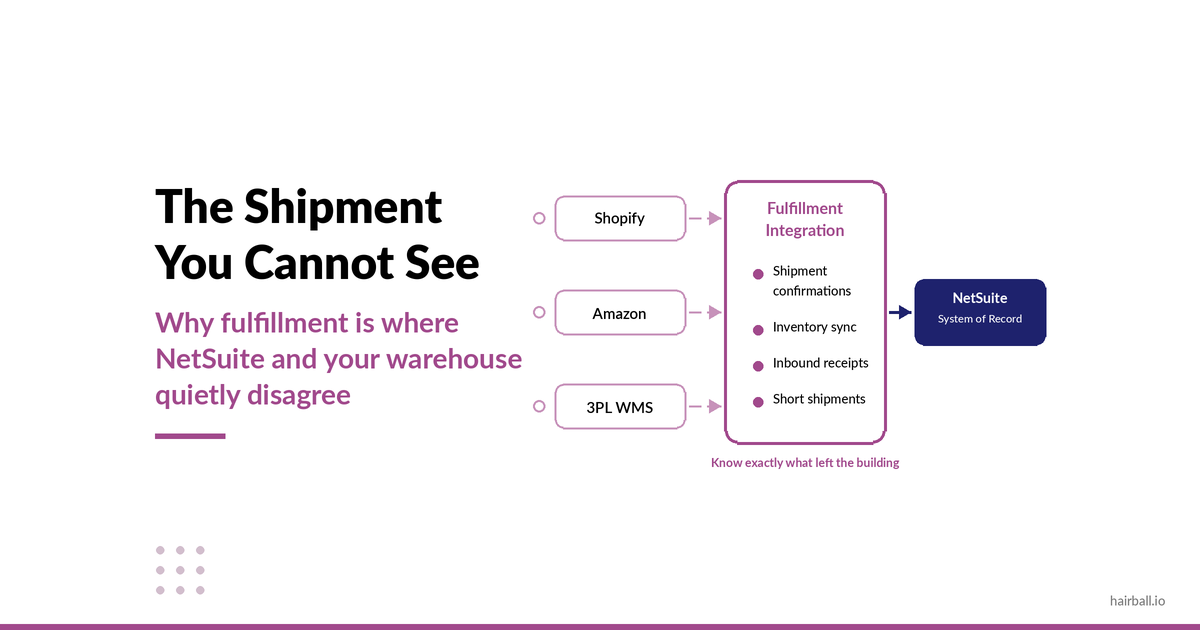
The third lens is data integrity at the join points. The places where NetSuite, Shopify, Amazon, EDI partners, and the 3PL hand data to each other are where most operational problems originate. Are item records consistent across systems. Are customer records duplicated in NetSuite because the integration is not matching cleanly. Are sales orders, item fulfillments, and customer refunds all reconciling cleanly into the financial period they belong to. These questions sound dry. They are also the questions that determine whether your January close takes one week or three.
The fourth lens is team operating model. Even a perfectly configured stack will throw errors at peak. The audit needs to confirm that someone owns each category of error, that the response time is measured, and that escalation paths exist for the categories that touch revenue. This is not a technology question. It is an organizational question, and it is usually the lens that exposes the gap between how the brand thinks it operates and how it actually operates.
What the audit produces
The output of a clean mid-year audit is short. It is not a fifty-page report. It is a one-page heat map of where the stack is healthy, where it is drifting, and where it is at risk. Behind that heat map sits a prioritized list of remediation work, with a clear owner and a clear timeline for each item. Anything that lands on the high-risk row needs to be addressed before the August freeze. Anything on the medium-risk row gets scheduled into the Q4 backlog. Anything on the low-risk row gets documented and revisited in the next audit cycle.
The other thing the audit produces, almost as a byproduct, is institutional memory. Most operations teams are carrying configuration knowledge in the heads of two or three people. When those people are on vacation in November, the knowledge is not available to the team. The audit forces that knowledge into a document. It does not have to be elegant. It just has to be written down. Brands that have done this work consistently outperform brands that have not, every single peak season.
The Shopify NetSuite integration question
For brands running a Shopify NetSuite integration, the mid-year audit has a specific accent. Shopify releases meaningful platform updates throughout the year. Checkout extensions, payment method changes, B2B updates, and new fulfillment options all introduce data that the existing integration may or may not be designed to carry. A Shopify NetSuite integration that worked beautifully in January may be silently dropping data in May because Shopify has added a field that the mapping does not handle. The audit catches this. The peak season catches it too, but at a much worse moment.
The same logic applies for brands running Amazon, TikTok Shop, Faire, Walmart Marketplace, or any EDI trading partner. Each one of those channels has its own release cadence, its own quirks, and its own way of evolving away from the original integration design. The audit asks, for each channel, whether the integration is keeping pace with how the business is using it today, not how the business used it eighteen months ago when the flow was first wired.
What good operations readiness looks like
The brands I work with that handle peak the cleanest share a few traits in how they approach the back half of the year. They do their NetSuite mid-year audit in June, not September. They treat their integration platform as infrastructure, not as a utility that runs in the background. They invest in continuous documentation and in clear ownership for every flow that touches revenue. They run a tight Q3 readiness program in July and August, with a hard freeze in early September. They go into Q4 with a stack they trust.
The brands that struggle with peak almost always share the opposite pattern. They skip the mid-year audit. They discover problems at volume. They burn their Q4 firefighting the things they could have caught in June. They spend January cleaning up the mess, and then, exhausted, they skip the next mid-year audit too. The cycle continues until something forces a reset, usually a costly incident or a finance discovery that nobody likes to explain.
How Hairball thinks about this work
This is the kind of work Hairball does every day. We are a top Celigo implementation partner and a NetSuite continued success provider, and most of our clients engage us not because their stack is broken but because they want to make sure it stays out of the kind of trouble that mid-year audits prevent. The audit itself is the easy part. The work that follows it, getting the right priorities into the right hands and executed before the freeze, is where most teams need a partner.
If you are a CFO, COO, or controller at a brand doing more than fifty million in revenue, June is the most valuable month in your operating calendar. You will not get another window this clean before Q4. The work you commit to now is the work that determines whether November and December feel like a victory lap or a survival exercise. The brands that come out of the year looking smart are the brands that did the unglamorous audit in June. The brands that spend January in cleanup were the ones that decided June was a soft month. You get to pick.
Frequently Asked Questions
What is a mid-year operations audit?
A mid-year operations audit is a structured June review of an eCommerce brand’s operations stack, looking through four lenses: NetSuite configuration drift, Celigo integration health, data integrity at the join points between systems, and the team operating model. It surfaces problems that are quietly drifting out of alignment before they become a Q4 incident or a January close issue.
Why should the audit happen in June specifically?
By July most teams shift to back-to-school and Q4 planning, by August the unofficial change freeze begins, and by September any material change to a NetSuite workflow or integration mapping draws pushback from finance and the warehouse. If issues are not surfaced by the end of June, the realistic window to fix them collapses fast.
What does a mid-year audit actually produce?
A clean audit produces a one-page heat map of where the stack is healthy, drifting, or at risk, plus a prioritized remediation list with a clear owner and timeline for each item. High-risk items get fixed before the August freeze, medium-risk items go into the Q4 backlog, low-risk items get documented for the next cycle. A byproduct is institutional memory: configuration knowledge moved out of two or three people’s heads and into a document.
How does a Shopify NetSuite integration change the audit?
Shopify ships meaningful platform updates throughout the year (checkout extensions, payment method changes, B2B updates, new fulfillment options). An integration that worked in January can silently drop data in May because Shopify added a field the mapping does not handle. The mid-year audit catches this before peak season does. The same logic applies to Amazon, TikTok Shop, Faire, Walmart Marketplace, and EDI trading partners, each with its own release cadence.
Who should run a mid-year operations audit?
It is most valuable for CFOs, COOs, and controllers at brands doing more than fifty million in revenue. The audit itself is the easy part; the work that follows, getting the right priorities executed before the freeze, is where most teams bring in a partner like Hairball, a top Celigo implementation partner and NetSuite continued success provider.